The world, in cards.
Live signals from arXiv, NASA, ESA, Launch Library, Wikipedia, GitHub, USGS, NOAA and the grid — rewritten into cards you can read in one breath. Below is the feed, right now.
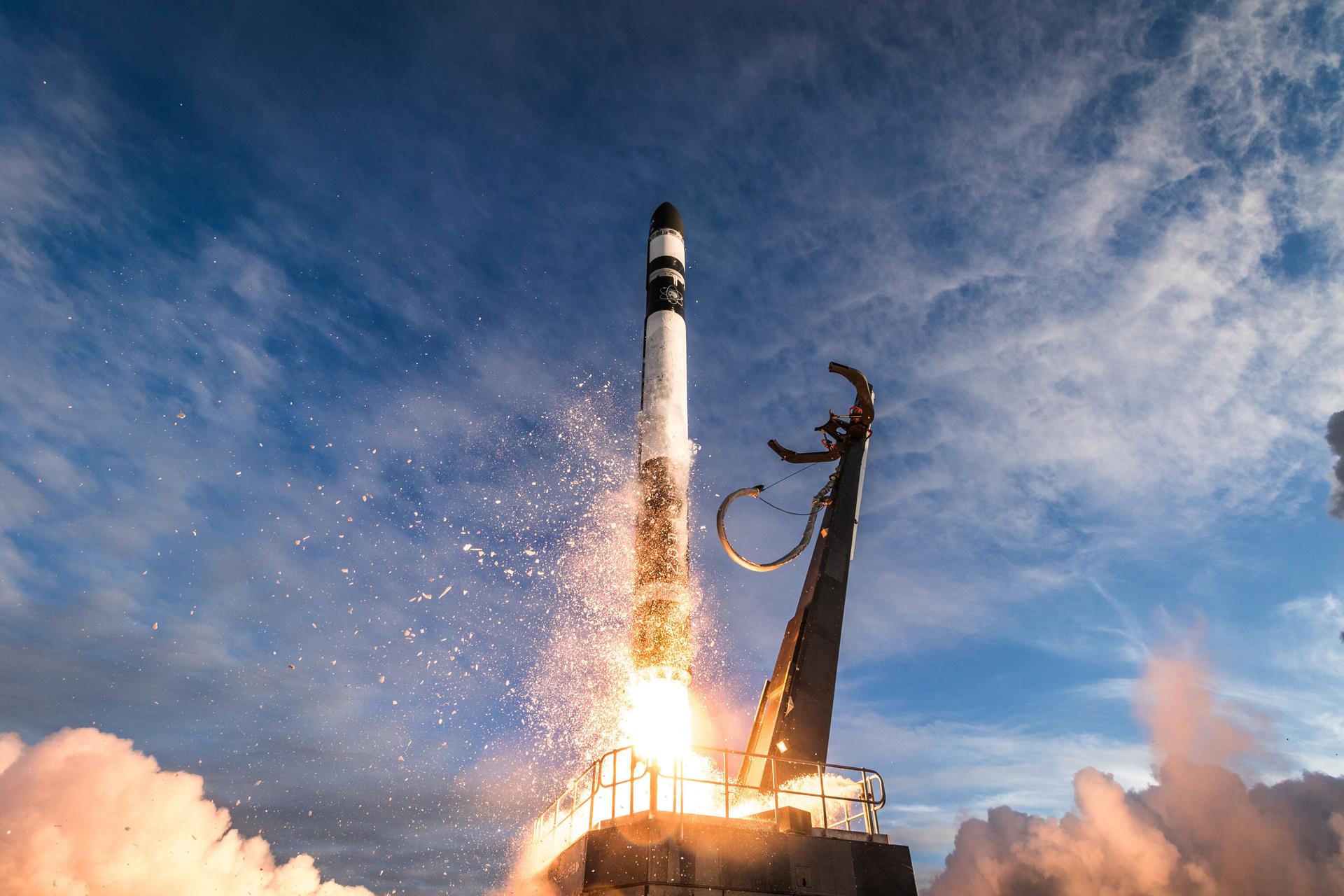

Telia launches critical IoT service via 5G Standalone network
JWST-TST High Contrast: First Direct Spectroscopy of GJ 504 b reveals Clouds and Possible Metal Enrichment
Ariane 6 launches with more powerful boosters: a new record for Europe
First Ariane 6 liftoff with most powerful boosters
Orca deploys quantum computer in Japan
Optical quantum computing company Orca Computing has deployed its PT-1 quantum computer in Japan, marking the country's first operational quantum computer. Developed in partnership with Toyota Tsusho, this deployment focuses on enterprise applications rather than scientific research. Orca's PT-1 uses individual photons (particles of light) at room temperature to perform quantum computations, offering a different approach compared to superconducting quantum computers that require extremely cold temperatures. This makes Orca's technology potentially more practical for integration into existing data centers. The collaboration aims to explore real-world applications for quantum computing, helping businesses understand and leverage its capabilities. This initiative could accelerate the adoption of quantum technologies beyond academic labs into commercial sectors. This deployment signifies a crucial step in making quantum computing accessible and practical for enterprise use.
GDELT NEWSMission Control : Floating In SpaceX Record - Breaking Orbit
SpaceX has just set a new record for the longest duration mission in orbit, a significant milestone for commercial spaceflight. While the specific details of this record-breaking mission, such as its duration, purpose, or the spacecraft involved, are not yet publicly known, this achievement underscores SpaceX's rapid advancements in space technology and operational capabilities. The company, founded by Elon Musk, has been at the forefront of reusable rocket technology and expanding human access to space. This new record further solidifies their position as a dominant force in the aerospace industry, continuously pushing the boundaries of what's possible beyond Earth. It highlights an ongoing trend of private companies taking an increasingly prominent role in space exploration and utilization.
DATA CENTERSpaceX shares keep rising, company worth more than Microsoft and Amazon
SpaceX has become the world’s fourth-largest publicly traded company by value. This makes the aerospace manufacturer and space transportation services company, founded by Elon Musk, more valuable than tech giants like Microsoft and Amazon. While the exact valuation fluctuates, this significant rise reflects investor confidence in its ambitious projects, including Starship development for lunar and Martian missions, and the rapidly expanding Starlink satellite internet constellation. SpaceX's ascent highlights a broader trend of increasing private investment and public interest in space exploration and commercial space endeavors, pushing the boundaries of what was once considered solely governmental enterprise. Why it matters: SpaceX's valuation signals a paradigm shift in the perceived economic potential of the space industry.
DATA CENTERPhilippine telco PLDT looks to launch data center REIT
Philippine telecommunications company PLDT plans to launch a Real Estate Investment Trust (REIT) focused on data centers. REITs are companies that own, operate, or finance income-producing real estate across a range of property sectors, allowing individuals to invest in large-scale properties traditionally available only to wealthy investors and financial institutions. PLDT intends to seed this new REIT with its Vitro data center facilities. This move allows PLDT to monetize its existing data center assets, freeing up capital that can then be reinvested into other areas of its business, such as network expansion or new technology development. By offering shares in the REIT, PLDT is creating a new investment vehicle for those interested in the growing digital infrastructure market in the Philippines. This strategy could also provide a more transparent valuation of its infrastructure assets.
DATA CENTERSingapore launches new national supercomputer
Singapore just launched Aspire 2B, a new national supercomputer boasting 115 petaflops of computational power. A petaflop is a measure of a computer's processing speed, specifically one quadrillion floating-point operations per second. This immense capability is achieved through a combination of AMD central processing units (CPUs), which handle general computing tasks, and Nvidia graphics processing units (GPUs), specialized for parallel processing and complex calculations. This powerful machine is designed to accelerate research and development across various scientific and engineering disciplines, from climate modeling to advanced artificial intelligence. Its advanced architecture will provide Singaporean researchers with the tools needed to tackle some of the world's most challenging problems. This supercomputer will significantly enhance Singapore's scientific research capabilities and its competitive edge in technology.
DATA CENTERstc and Huawei launch green telco cloud platform to cut energy use and physical infrastructure
Saudi Telecommunications Company (stc) and Huawei have launched a "Green Telco Cloud" platform, aiming to significantly reduce energy consumption and physical infrastructure in their data centers. This initiative focuses on optimizing telecom cloud operations to be more environmentally friendly and efficient. By deploying advanced technologies, the platform is designed to streamline processes, minimize the need for extensive hardware, and ultimately lower the carbon footprint associated with large-scale telecommunications networks. This move reflects a growing trend in the tech industry to integrate sustainability into core operational strategies, addressing both environmental concerns and operational costs. The Green Telco Cloud targets a more sustainable future for digital infrastructure development. Why it matters: Sustainable telecom infrastructure is crucial for reducing the environmental impact of the rapidly expanding digital world.
One concept.
One card.
One swipe.
Pick topics
15 fields across physics, ML, robotics, materials, climate, infrastructure.
Swipe
120–180 words per card. Image, chart or video where it earns the space.
Save & quiz
Save what hits. Optional one-question quizzes build retention without the grind.